top of page


Karim Basbous
Conference
Architecture and dignity
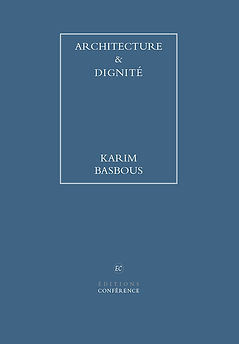
The prestige of architecture is measured by a concept that, unlike beauty, utility, or construction itself, has remained in the shadows of treatises. It is in the cradle of Western architecture, at a time when the art of building was primarily an offering, that dignity emerged, with the colonnade beneath a pediment, the face of the Hellenic temple. The power of this portico figure left such a profound mark on people's minds that architectural production drew inspiration from it throughout the centuries to maintain the image of dignity, for the benefit of the prince, the bishop, or the community. Unraveling the secret of this longevity and universality leads us to trace the genealogy of the multiple motivations behind the act of building. Dignity, which has survived its original form and whose expression has been renewed by modern masters, is what powers have used to occupy the stage and decorate the city, but also what has nourished architectural projects in order to infiltrate constructive knowledge, ennoble the practical function of walls, and overcome the disparity of lines in plan, section, and elevation through the will of an ordering whole. It can mobilize a sovereign plan, like the detached and autonomous naos, as illustrated by Mies van der Rohe's New National Gallery in Berlin or Kahn's Exeter Library, or a certain way of defying gravity, which can be observed in the palaces of Italian communes of the Duecento as well as in Brazilian modernism—such as Artigas's Faculty of Architecture in São Paulo—or even the art of lifting, of which certain Corbusian projects—notably the Radiant City—are the striking manifestation. From the earliest Western cities to the postmodern urban center, this notion sheds new light on the social functions of beauty, as well as other major concepts such as utility, gravity, scale, structure, order, and decoration. Dignity also allows us to examine, from a fresh perspective, the conditions of invention, the search for meaning since the last century, the role of models in the imagination of architects, our relationship to luxury and grandeur, and our attachment to the public spaces that buildings safeguard.
bottom of page